People ride bikes for years and still aren’t sure how to use the gears. Some days they seem to help. Some days they are loud and annoying. This guide is meant to explain bicycle gears in a way that doesn’t sound like a textbook.
It’s not perfect. It moves a little. Like real conversations between riders do. You don’t have to be a mechanic. You just need to be patient and maybe remember how hard it was to climb a hill once.
What Bicycle Gears Are Actually Doing
At their most basic level, gears change how hard or easy it is to pedal. That’s all. Not a thing magical. Most of the time, when people ask about bicycle gears, they want to know why pedaling feels different even when the bike speed changes.
Gears control:
- How many times the wheel turns
- How much force your legs need
- How fast you move with each pedal stroke
Lower gears feel lighter. Higher gears feel heavier.
Your legs feel it before your brain does. Gear explain videos can make things look hard, but on the road, it’s mostly about how it feels.

Why Gears Exist On Bicycles
If bikes had no gears:
- Hills would feel impossible
- Flat roads would feel slow
- Long rides would hurt more
Gears keep your body comfortable. It’s easier to understand bicycle gears if you think about walking. When you walk up a hill, you don’t walk the same way as when you walk down a hill. Your bike needs the same change. Gears help your legs stay in sync. That rhythm is more important than speed.
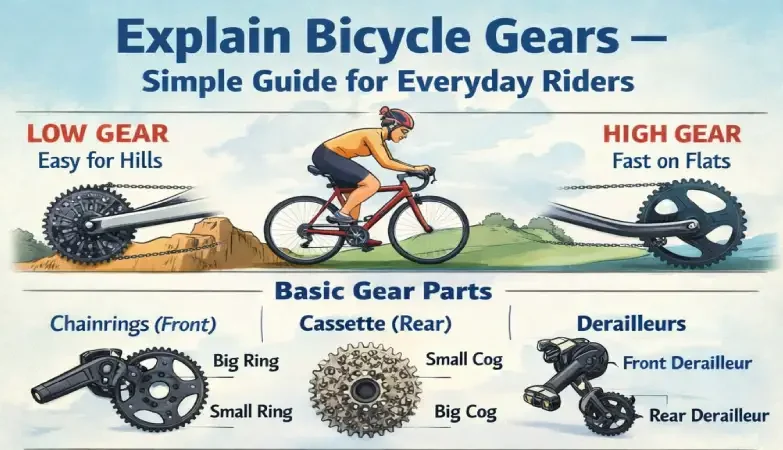
Basic Gear Parts You Should Know
You don’t need to memorize everything. But knowing names helps a little.
Chainrings (Front Gears)
These are near the pedals.
- Bigger chainring = harder pedaling
- Smaller chainring = easier pedaling
Most bikes have:
- One
- Two
- Or three chainrings
When people ask for gear explain basics, this is usually where confusion starts.
Cassette (Rear Gears)
These are the gears on the back wheel.
- Smallest cog = harder gear
- Biggest cog = easier gear
Rear gears fine-tune your effort. Front gears make bigger changes. This difference matters when you explain bicycle gears clearly.
Derailleurs
These move the chain.
- Front derailleur moves between chainrings
- Rear derailleur moves across the cassette
They look fragile. They kind of are. Bad shifting usually means they need adjustment, not replacement.
How Gear Shifting Really Feels
People explain bicycle gears using numbers and ratios. But riding isn’t math.
Shifting should feel:
- Smooth
- Quiet
- Natural
If it feels crunchy or loud:
- You shifted under too much pressure
- Or the bike needs tuning
A simple gear explain tip:
- Ease off the pedals slightly when shifting.
- That tiny pause helps a lot.
Understanding Low Gears Without Overthinking
Low gears are for:
- Hills
- Starting from a stop
- Riding into strong wind
They feel like they’re spinning. Your legs move quickly, but the bike moves slowly. Some riders are embarrassed to use low gears. There is no reason. When you teach beginners about bike gears, make sure to tell them: Low gear is smart, not weak.
Understanding High Gears In Real Life
High gears are for:
- Flat roads
- Downhill sections
- Faster cruising
They feel heavy. Each pedal stroke pushes the bike far.
But pushing too hard:
- Tires you out
- Hurts knees over time
Gear explain mistakes often happen here. People stay in high gears too long.
Cadence Matters More Than Gear Numbers
Cadence means how fast your legs spin.
- Most comfortable cadence: Around 70–90 rotations per minute
- If pedaling feels slow and heavy: Shift to easier gear
- If pedaling feels out of control fast: Shift to harder gear
This idea helps explain bicycle gears better than gear charts.
Front Gears vs Rear Gears Confusion
This part trips many riders.
Front gears:
- Big changes
- Less frequent shifting
Rear gears:
- Small changes
- Used more often
A simple gear explain habit: Use rear gears most of the time. Use front gears when terrain changes a lot.
Gear Combinations To Avoid
Some combinations strain the chain.
Avoid:
- Big front + big rear
- Small front + small rear
This is called cross-chaining.
It causes:
- Noise
- Wear
- Rough shifting
When you explain bicycle gears properly, this detail saves bikes.
Gears On Different Bike Types
Not all bikes use gears the same way.
Mountain Bikes
- Wide gear range
- Designed for hills and rough paths
- Easier gears are very easy
Gear explain tips often start with mountain bikes because differences are obvious.
Road Bikes
- Narrower gear range
- Designed for speed
- Gears feel closer together
Explain bicycle gears here carefully, because road bikes confuse new riders fast.
Hybrid And City Bikes
- Balanced gearing
- Comfortable for daily riding
- Simple shifting systems
These are easiest to understand when learning gear explain basics.
Internal Hub Gears (Different Feel)
Some bikes hide gears inside the hub.
Benefits:
- Shift while stopped
- Low maintenance
- Clean look
Downside:
- Limited gear range
- Heavier
Still, many people prefer them. Explain bicycle gears differently when hubs are involved.
When To Shift Gears (Timing Matters)
Bad timing causes problems.
Shift:
- Before hills
- Before stopping
- Gradually, not all at once
Don’t wait until:
- Legs hurt
- Pedals feel stuck
Gear explain advice often skips timing, but timing is everything.
Common Beginner Gear Mistakes
These happen a lot.
- Staying in one gear all ride
- Shifting under full pressure
- Ignoring front gears
- Cross-chaining
- Thinking harder gear means faster always
Explain bicycle gears patiently and these mistakes fade.
Gears And Knee Pain Connection
This matters more than people admit. Pushing heavy gears:
- Strains knees
- Causes long-term pain
Spinning easier gears:
- Protects joints
- Improves endurance
When you explain bicycle gears honestly, health should be part of it.
Riding Hills Without Fear
Hills scare new riders. But gears are built for hills. Before hill:
- Shift down early
- Keep cadence steady
During hill:
- Stay relaxed
- Breathe
Gear explain conversations always circle back to hills.
Why Gears Sometimes Don’t Shift
It’s not always your fault. Common reasons:
- Dirty chain
- Cable stretch
- Bent derailleur
- Misalignment
Explain bicycle gears with maintenance in mind. Clean bikes shift better.
Simple Gear Maintenance Tips
You don’t need a workshop. Basic care:
- Clean chain regularly
- Lubricate lightly
- Avoid water pressure near gears
A quiet bike is usually a healthy bike. Gear explain articles forget this, but it matters daily.
Gears And Speed Myth
Many think:
- Harder gear = faster speed
- Not always true.
Speed comes from:
- Cadence
- Consistency
- Terrain
Explain bicycle gears without feeding that myth.
How Pros Use Gears Differently
Professional riders:
- Shift constantly
- Protect cadence
- Think ahead
They don’t grind gears. Gear explain lessons from pros apply to everyone, just slower.
Teaching Kids Bicycle Gears
Kids learn by feel. Tell them:
- Spin fast = easier
- Push hard = harder
Don’t overload words. Explain bicycle gears to kids using rides, not lectures.
When You Don’t Need Gears
Some bikes have one gear. They work for:
- Flat cities
- Short rides
- Simple lifestyles
But even then, riders understand gear explain ideas subconsciously.
Final Thoughts That Drift A Bit
People sometimes think too much about gears. They don’t pay attention to them at all sometimes. In the middle is the truth. Tell people that bicycle gears are tools, not rules. Let the riders feel their way through. You will mess up shifts. Everyone does. Gear explain isn’t about being perfect. It’s all about comfort, rhythm, and getting home without hurting your knees. And yes, the chain still makes noise sometimes.