Explain Gears On A Bike – Simple Human Guide For Beginners
People sometimes ask about gears and bicycles as if they were some kind of big science thing. Not really. I’ll try to talk about bike gears in a way that sounds like a normal person, not like a textbook. It’s okay if some parts repeat a little. Because gears do the same thing over and over again.
At first, the gears on a bike can be hard to understand. There are too many numbers, clicking sounds, and chains moving. But if you take a step back and look at what’s going on, it starts to make sense. Slowly.
What gears on a bike actually do
Gears help you control how hard you work. That’s the easiest way I can think of to explain how bike gears work. They don’t make you go faster by magic. They help you figure out how hard or easy it should be to pedal.
This is how to think about gears:
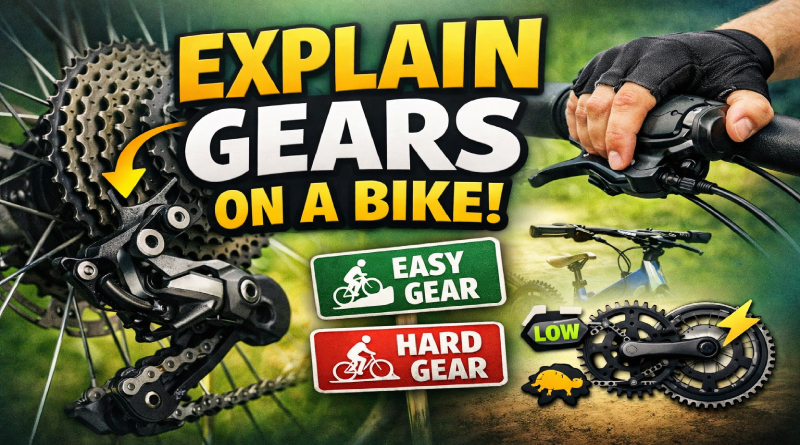
- Easy gear = legs move fast, bike moves slow
- Hard gear = legs move slow, bike moves fast
That’s all. That’s the main point. This one thought is the source of most of gear explain.
Your legs hurt when you go up. You use a simple gear. You can use harder gears when you’re going downhill or on flat ground. Nothing special.
Why bikes even need gears
Bikes from the past didn’t have gears. People still rode them. But gears make it less painful to ride. That’s the truth.
To be honest, when I talk about bike gears, it’s about comfort and control. No gears:
- Hills feel rough
- Long rides hurt your knees.
- It’s harder to control speed.
You change with gears. You change how power moves from your legs to the wheels. That’s pretty much the whole story about gear.
Main Parts Involved In Bike Gears
Let’s take this slowly. Take your time.
Front gears (chainrings)
These are the big, round pieces of metal that are close to the pedals. 1, 2, or 3 of them most of the time.
- Bigger chainring = harder pedaling
- Smaller chainring = easier pedaling
The front gears make big changes. A lot of people leave this part out when they talk about bike gears, but it’s very important.
Rear gears (cassette or freewheel)
These are the little gears that are close to the back wheel. There are a lot of them, like 7, 8, 9, or more.
- Bigger rear gear = easier pedaling
- Smaller rear gear = harder pedaling
Fine-tuning is what rear gears are for. This is where most of the gear talk happens while riding.
How Front And Rear Gears Work Together
People get confused by this part.
You don’t just use gears. The front and back work together. You have to talk about combinations when you explain bike gears the right way.
- Small front + big rear = very easy
- Big front + small rear = very hard
Some combinations sound or feel strange. That’s normal. The angle of the chain is important, but beginners shouldn’t worry about it.
Gear Shifters And What Those Clicks Mean
You pull a lever, hear a click, and the chain moves. Not so simple.
Every click moves the chain one step. That’s all. This part is important when I try to explain bike gears because people think that holding the lever does something special. No, it doesn’t.
- One click = one gear change
- Multiple clicks = multiple changes
If shifting feels rough, you might be pedaling too hard or not at all. Timing is always a part of gear explain.
When Should You Change Gears
This is where emotions come in.
You shift gears when pedaling doesn’t feel right. Either too heavy or too spinny. There are no rules.
Signs that you should move:
- Legs burning too fast
- Pedals feel stuck
- Bike not responding
When you talk about bike gears, you should pay more attention to your legs than to numbers.
Cadence, A Word People Love Too Much
Cadence is how fast you pedal. That’s all there is. People make it sound hard.
A comfortable rhythm feels smooth. Not slowly grinding or wildly spinning. When gear explain includes cadence, it helps you understand why gears are there.
Gears help keep the cadence steady, even when the ground changes.
Gears And Hills (This Deserves Its Own Space)
Hills are why gears feel important.
Before a hill:
- Shift to easier gear early
During a hill:
- Keep pedaling smooth
- Don’t wait until legs die
After hill:
- Shift back gradually
If you try to explain gears on a bike without hills, it feels incomplete. Hills are the test.
Flat Roads And Speed Control
On flat roads, gears are about speed and comfort.
You can ride in one gear, sure. But adjusting helps:
- Headwind = easier gear
- Tailwind = harder gear
This part of gear explain is subtle. You feel it more than you think about it.
Downhill Riding And Gears
People forget this.
Downhill doesn’t mean no gears. You still shift.
- Too easy = legs spin uselessly
- Too hard = chain stress
To explain gears on a bike properly, downhill matters too. Control is everything.
Common Beginner Mistakes With Gears
Everyone makes these mistakes. I still do sometimes.
- Shifting while stopped
- Shifting under heavy pressure
- Ignoring front gears completely
- Staying in one gear forever
Gear explain becomes real when mistakes happen. That’s how you learn.
Chain Stress And Weird Noises
If your bike sounds angry, something’s off.
Grinding noises usually mean:
- Bad gear combination
- Dirty chain
- Poor timing
When people explain gears on a bike, they forget sound. But sound is feedback.
How Many Gears Do You Actually Need
Honestly? Fewer than you think.
Modern bikes have many gears, but most riders use a few. Gear explain doesn’t mean memorizing all options.
You’ll find:
- Favorite climbing gear
- Favorite cruising gear
- The rest exist just in case.
Gear Numbers And Why They Confuse People
Bikes don’t make it clear what gears are. No “gear 1, gear 2” logic.
That’s why guides that explain bike gears focus on how they feel, not on numbers. The numbers change between bikes anyway.
Internal gears vs external gears
Quick side topic, then back.
Some bikes hide gears inside the hub. These are internal gears.
- Cleaner
- Less maintenance
- Limited range
External gears:
- More range
- Lighter
- More exposed
Gear explain stays similar for both, but shifting feel changes slightly.
Maintenance Affects How Gears Feel
Dirty bike = bad shifting.
Simple truth.
- Clean chain
- Lubed cables
- Adjusted derailleur
If gears feel bad, it’s not always your fault. When you explain gears on a bike, maintenance matters more than technique sometimes.
Kids Bikes And Gears
Kids struggle with gears too.
They forget to shift. Or shift randomly. That’s normal.
Teaching kids to explain gears on a bike should start with:
- “Easy for hills”
- “Hard for fast”
No more than that.
Gears And Knee Health
This is important but often ignored.
Grinding in hard gears hurts knees. Easy gears protect joints. Gear explain isn’t just performance talk, it’s health too.
If knees hurt:
- Shift easier
- Spin more
Simple advice, but it works.
Single Speed Bikes And Why People Like Them
Some riders ditch gears entirely.
Single speed bikes:
- Simple
- Quiet
- Challenging
But even single speed riders understand gear explain because they choose one gear ratio instead of many.
Mental Side Of Learning Gears
Gears feel mental at first.
You overthink:
- “Is this right gear?”
- “Did I break something?”
Then one day, it clicks. You stop thinking. That’s when explain gears on a bike becomes muscle memory.
Real-life riding is messy
Roads change. Wind changes. Traffic interrupts you.
Perfect gear choices don’t exist. Gear explain in real life is about adapting, not perfection.
Sometimes you’re in the wrong gear. You survive.
Why Experienced Riders Shift So Much
Watch cyclists who have been doing it for a while. They are always moving.
Not because they’re fancy, but because they pay attention to their bodies. You can better understand bike gears by looking at them.
They don’t wait until it hurts.
Touring Bikes And Heavy Loads
More weight = more need for gears.
Loaded bikes need:
- Easier gears
- Smoother transitions
Gear explain becomes critical when carrying bags. What worked before might not work now.
Mountain biking and gear use
Off-road riding changes everything.
- Sudden climbs
- Loose terrain
- Quick shifts
To explain gears on a bike for mountain biking, timing becomes faster and more reactive.
Road Bikes And Close Gear Spacing
Road bikes have tighter gear steps.
That means:
- Small changes
- Smoother cadence
Gear explain here focuses on fine control, not big jumps.
Final Thoughts That Aren’t Really A Conclusion
There is no perfect way to end an explanation of gears. You ride, you change gears, and you learn. After that, you forget you were worried. That’s how most people end up explaining bike gears.
Gears are no longer a topic. They turn into background noise. And to be honest, that’s what any good gear explain should do.