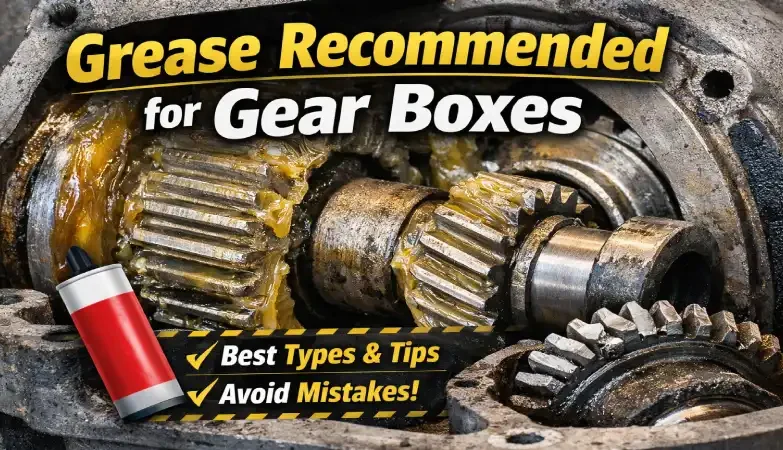
Grease Recommended For Gear Boxes – A Real World Explanation
People don’t think about gear boxes very much until something goes wrong with them. The noise starts, the heat rises, or even worse, the whole system slows down. Most of the time, it comes down to lubrication. More specifically, using the wrong grease or not knowing what grease is best for gear boxes in real life.
This guide doesn’t want to sound fancy. It sounds like someone who has worked with gear systems, made mistakes, and learned slowly wrote it. We’ll explain things the way they are, not the way books want them to be.
You might see some things that are the same. That was on purpose. Real people think this way, so real explanations repeat.
Why Gear Boxes Need Grease In The First Place
Under pressure, gear boxes work. In a literal sense. Inside, the gears are moving, sliding, and rotating, sometimes quickly and sometimes very slowly. Even though we don’t want it to, metal touches metal.
- Reduces friction between gear teeth
- Prevents direct metal contact
- Absorbs shock loads
- Helps with noise control
- Protects against corrosion
Without proper grease recommended for gear boxes, wear accelerates fast. And once wear starts, it rarely stops on its own.
Grease Vs Oil – The Confusion Never Ends
People get stuck here. Is it better to use oil or grease? The answer isn’t clear. Grease is just oil that has gotten thicker. That thickness is important.
Grease is usually preferred when:
- The gear box is sealed
- The gears move slowly
- There is a risk of leakage
- Maintenance access is limited
Oil is better for systems that need to go fast, but that’s not the point of this article. We’re here to talk about the best grease for gear boxes, not make things harder.
What Makes Grease Suitable For Gear Boxes
Not all grease is the same. Many people make the mistake of using random grease because it was there.
Base Oil Matters More Than People Think
The base oil inside grease determines:
- Load carrying ability
- Film strength
- Temperature behavior
For gear boxes, the base oil usually needs to be thicker. Grease with thin oil in it just can’t handle heavy loads.
Thickener Type Plays A Silent Role
The thickener holds the oil in place. Common ones include:
- Lithium
- Lithium complex
- Calcium sulfonate
- Polyurea
Each one reacts differently to heat, pressure, and moisture. Lithium complex or calcium sulfonate are the best types of grease for gear boxes because they can handle pressure better.
Understanding Gear Load And Speed
You need to know how the gear box works before you pick a grease. A lot of guides skip ahead too quickly at this point.
Slow Speed, Heavy Load
These conditions scream for grease recommended for gear boxes with:
- High base oil viscosity
- Strong EP (Extreme Pressure) additives
- Good mechanical stability
Think conveyors, mixers, crushers. These gears don’t spin fast, but they carry brutal loads.
Moderate Speed Gear Boxes
These are common in factories. They still need grease, but balance is important. It gets too hot if it is too thick. Wear goes up when it’s too thin. This is where gear explanation becomes useful, not just theoretical.
EP Additives – Quiet But Critical
Most gear boxes need Extreme Pressure additives. When the pressure goes up, they make a chemical layer that protects.
Without EP additives:
- Gear teeth scuff
- Micro-pitting increases
- Noise levels rise
Most grease recommended for gear boxes includes sulfur-phosphorus or similar EP chemistry.
Temperature Range Is Not Just A Number
Manufacturers list temperature ranges, but real life doesn’t care about brochures.
If a gear box runs hot:
- Grease can soften
- Oil separates
- Thickener breaks down
Cold places cause other problems. Grease hardens and doesn’t flow back into the places where gears touch. So, the grease that is best for gear boxes must work at the same temperature as the gear boxes do, not in a lab.
Enclosed Gear Boxes And Grease Behavior
Enclosed gear boxes trap grease inside. That sounds good, but it creates its own issues.
- Churning losses
- Heat buildup
- Oil separation
When choosing grease here, stability should be the main thing to think about. If grease breaks down, it won’t spread out evenly. This is where people get the wrong idea about grease for gear boxes and blame the gear box instead.
Common Types Of Grease Used In Gear Boxes
Let’s gear explain this simply.
Lithium Complex Grease
Very common. Reliable. Affordable. Good for:
- Moderate to heavy loads
- Wide temperature range
- General industrial gear boxes
Not perfect, but rarely disastrous.
Calcium Sulfonate Grease
This one handles extreme pressure well. Good for:
- Shock loads
- High moisture environments
- Heavy-duty gear boxes
Slightly expensive, but worth it in harsh conditions.
Polyurea Grease
Mostly used in electric motor bearings, but sometimes gear boxes too. Good for:
- Long life
- Oxidation resistance
- Less common in heavy gear applications.
Grease Consistency And NLGI Grade
NLGI grade tells you how thick the grease is. For gear boxes:
- NLGI 00 and 000 are common
- NLGI 1 sometimes works
- NLGI 2 is often too thick
Putting too much grease in a gear box can cause starvation. That’s a killer that doesn’t make any noise. Most of the grease that is recommended for gear boxes is semi-fluid.
Oil Separation – The Hidden Enemy
Some grease releases oil under load. This isn’t always bad, but uncontrolled separation is trouble. If oil separates too fast:
- Grease hardens
- Gears run dry
- Wear accelerates
Good grease recommended for gear boxes balances oil release with retention.
Relubrication Intervals – Guessing Is Not A Strategy
People either over-grease or forget completely. Both are bad. Over-greasing causes:
- Heat
- Churning
- Seal damage
Under-greasing causes:
- Metal contact
- Noise
- Failure
A realistic maintenance schedule matters more than fancy grease sometimes.
Noise, Vibration, And Grease Choice
Gear boxes talk. You just need to listen.
- High-pitched noise often means thin lubrication
- Grinding means EP failure
- Vibration increases when grease degrades
Switching to proper grease recommended for gear boxes often reduces noise noticeably.
Mistakes People Keep Making
These mistakes show up everywhere.
- Using bearing grease in gear boxes
- Ignoring manufacturer viscosity guidelines
- Mixing grease types
- Assuming all grease works the same
Gear explain is not about memorizing charts. It’s about understanding why these mistakes hurt.
Mixing Grease – Usually A Bad Idea
Different thickeners don’t always get along. Mixing can cause:
- Grease softening
- Grease hardening
- Oil bleed
If you need to change the grease in your gear boxes, make sure to clean the system well. Not doing this step costs more later.
Environmental Factors Matter More Than Expected
Dust, water, chemicals. They all attack grease.
- In wet environments: Water-resistant grease is critical
- In dusty areas: Grease must seal effectively
Calcium sulfonate grease often shines here.
Real-Life Gear Box Failures Linked To Grease
Many failures blamed on “poor design” are lubrication problems.
- Pitting from low EP performance
- Overheating from wrong NLGI grade
- Seal leaks from over-greasing
It’s not just marketing talk that says grease is good for gear boxes. It has a direct effect on how long you live.
Choosing Grease Without Overthinking
Here’s a simplified thought process:
- Identify load
- Identify speed
- Check temperature
- Check environment
- Match viscosity and thickener
That’s it. No magic.
Final Thoughts On Grease Recommended For Gear Boxes
Gear boxes don’t need miracles. They need consistency and understanding. Using the right grease recommended for gear boxes:
- Extends service life
- Reduces noise
- Lowers maintenance cost
- Prevents sudden failures
This is the most important thing to remember: grease isn’t just grease. And gear explain doesn’t have to be hard to work. Even if it doesn’t sound impressive, the simplest choice for lubrication is sometimes the best one.