Most Gears On A Truck: A Simple, Real Explanation
You might have wondered what was going on inside a big truck that was slowly changing speed if you ever sat near a highway and saw it. I used to think this way too. Cars seem easy. Trucks seem hard to understand. Gears are a big part of it. There are a lot of them. It can feel like too many at times.
This article is just a calm, human-style explanation of gears. No complicated technical stuff. How things work, why they work that way, and what people really mean when they talk about the most gears on a truck.
There will be some repetition here and there. That’s normal. This subject kind of goes in circles.
Why Trucks Even Need Gears In The First Place
Let’s start with something simple.
A truck is big and heavy. Sometimes very heavy. Not just the truck, but also what it’s carrying. You can find logs, fuel, food, cars, cement, and more. You need to control all that weight.
Gears help with:
- Moving heavy loads from a stop
- Climbing hills without killing the engine
- Saving fuel over long distances
- Keeping speed steady on highways
This kind of stress is too much for cars. Every single day, trucks do. People don’t brag when they talk about the most gears on a truck. It’s useful.
How Many Gears Does A Truck Usually Have
This is where people get confused. Some trucks have:
5 gears, 6 gears, 8 gears, 10 gears, 13 gears, 18 gears
Yes, 18. That number surprises a lot of people.
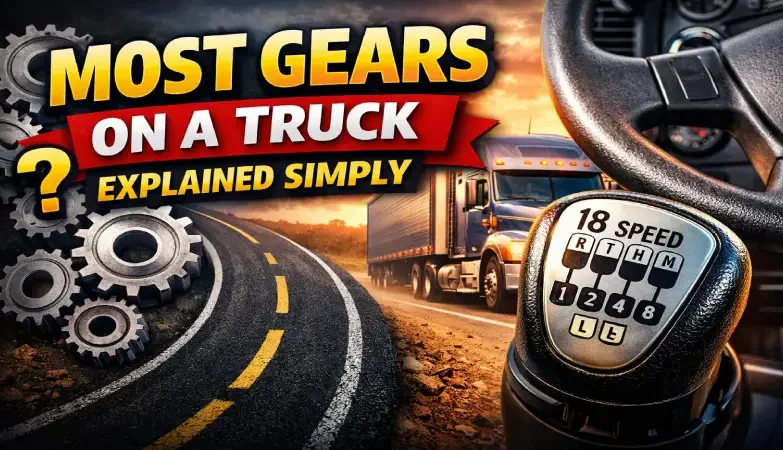
When someone asks how many gears a truck has, they usually say 18-speed trucks. These are common in long-haul trucking, especially in places with mountains or heavy freight routes.
But not all trucks need that many gears. A delivery truck in a city doesn’t have the same life as a highway hauler.
What “18 Gears” Actually Means
Here’s a simple gear explain. An 18-speed truck doesn’t feel like shifting 18 times in a row like a video game. It’s more layered than that.
Usually, it includes:
- Low range gears
- High range gears
- Split gears for fine control
The driver uses both a gear stick and switches. It sounds hard, and to be honest, it is at first.
But after a while, drivers get used to it and the system helps them stay in the right power range. That’s why having more gears on a truck makes things easier, not harder.
Why More Gears Can Be Better
It sounds strange, but more gears give smoother control. Here’s what extra gears help with:
- Less strain on the engine
- Better fuel efficiency
- Easier uphill driving
- Safer downhill control
- Reduced wear on parts
Each gear has to work harder when a truck has fewer gears. Having more gears makes the work easier. That’s why trucks that carry heavy loads over long distances usually have the most gears.
Gears And Hills: Where It Really Matters
If you’ve never driven through hills with weight, this part might not feel important. But it really is. Imagine climbing a long hill:
- Too high a gear → engine struggles
- Too low a gear → engine screams
The sweet spot is tiny. More gears help you find that spot. This is where a good gear explanation is very important. Truck drivers don’t shift just for fun. They change gears to get over hills without using more gas or hurting the engine. More gears on a truck give drivers more choices. And when gravity is working against you, having options is important.
City Trucks Vs Highway Trucks
Not all trucks are built the same.
City Trucks
- Short distances
- Frequent stops
- Lighter loads
- Fewer gears (5–8 usually)
Highway Trucks
- Long distances
- Heavy loads
- Variable terrain
- More gears (10–18)
When people talk about the most gears on a truck, they usually mean highway trucks, not delivery vans. People often miss this difference, but it is important.
Manual Vs Automated Gear Systems
Another thing that confuses people.
Older trucks:
- Fully manual shifting
- Driver controls everything
- Needs experience
Newer trucks:
- Automated manual transmissions
- Computer helps shift
- Still uses many gears
Even automated systems can have the most gears on a truck. The only difference is who does the shifting. The computer or the driver. This is a modern gear that makes sense today. Gears didn’t go away. They just got quieter.
Why Trucks Don’t Just Use Automatic Like Cars
This is something that a lot of people ask. The short answer is “control.” Automatic car transmissions are made to be comfortable. The transmissions in trucks are made for work.
Trucks need:
- Precise torque control
- Engine braking
- Load-sensitive shifting
Even though a truck feels like it’s automatic, it still has different gear stages. That’s why most trucks still have the same gears, even in newer models.
Fuel Efficiency And Gears
This part feels boring but it’s important. Fuel costs money. A lot of money. More gears allow:
- Lower RPM at cruising speed
- Better fuel burn
- Less wasted energy
A truck saves gas when it stays in the right RPM range. That’s another quiet reason why a lot of people like trucks with a lot of gears. Drivers might not talk about it in an emotional way, but companies do.
Learning Curve For Drivers
Let’s be honest. Driving a truck with many gears is not easy at first. Drivers often say:
- It feels overwhelming
- Mistakes happen early
- Muscle memory takes time
But a lot of drivers want more gears after they learn. You hear this all the time. A good gear explanation can’t leave out the human side. People, not just machines, drive trucks.
Gear Splitting And Range Selection
This sounds technical, but I’ll keep it simple.
- Gear splitting means: Dividing one gear into two smaller steps
- Range selection means: Switching between low and high gear sets
They make the most gears on a truck without making the gearbox too big. This system lets you be flexible without having to change everything.
Maintenance And Wear Considerations
More gears doesn’t always mean more problems.
Actually:
- Proper shifting reduces wear
- Engine stress is lower
- Parts last longer
The number of gears doesn’t matter; bad shifting does. This is another part of the gear explain conversation that people don’t get.
Why Drivers Still Like Manual Control
Even with automation, many drivers like control. Reasons include:
- Feeling connected to the truck
- Better response in tough conditions
- Personal driving style
That’s why trucks with the most gears on a truck still exist in manual form. Preference matters.
Are More Gears Always Necessary?
No. And this needs to be said. If a truck:
- Stays in flat areas
- Carries light loads
- Drives short routes
Then fewer gears make sense. The most gears on a truck are for specific jobs, not everyone.
Common Myths About Truck Gears
Let’s clear some confusion.
- More gears does not mean faster
- More gears does not mean harder driving forever
- More gears does not mean outdated technology
- Most myths come from not having a proper gear explain available.
Real-World Example

A truck that is fully loaded starts from a stop on a hill, in the rain, with cars behind it. The driver needs a steady flow of power, not bursts of power. This is where a truck’s gears work best. Each shift is small, safe, and in control.
That’s not a theory. That’s driving every day.
Final Thoughts On Truck Gears
No drama here. Just engineering doing what it does. Trucks have the most gears because they do a lot of hard work. Gears help you keep track of your weight, speed, fuel, and safety all at once. The main point is that having more gears doesn’t mean things are harder. They have to do with control.
I hope this gear explanation sounded human enough. It might have been a little off, maybe even repetitive, but it was clear. Trucks are not simple machines, and explaining them shouldn’t sound robotic either.