STARTING OFF, NOT TOO FANCY: This isn’t one of those articles that starts with a big promise and then goes on to talk about how great it is. It’s more like someone who just got back from the yard and is scratching their arms and thinking, “Yeah, I should have worn better stuff.” Poison ivy is like that: it bothers you. You don’t notice it at first, but then it’s too late. That’s when poison ivy protective gear starts to come into play, usually after someone has a bad experience.
People think they can just stay away from the plant. You can do it sometimes. You can’t always do it. It stays hidden. It grows in places you don’t expect. So gear becomes less of a choice and more of a common sense thing.
WHAT POISON IVY ACTUALLY DOES TO YOU?
Before you start looking at gear lists, it’s helpful to know why people wear poison ivy protective gear in the first place. The plant gives off an oil called urushiol. You can’t see it. You can’t smell it. But it stays.
The leaf touches the skin. Transfers of oil. Rash shows up later.
Some people don’t like it. Some people say they don’t react, but then one day they do. That’s strange, but it does happen.
Symptoms usually include:
- Redness that spreads
- Blisters that leak
- Burning itch that doesn’t stop
- Skin feeling hot and tight
Washing it off quickly is the only way to get rid of it once it’s on your skin. After that, it’s more about getting better than stopping it. So, yes, prevention is important.
WHY POISON IVY PROTECTIVE GEAR IS EVEN A THING
You might be wondering, “Why not just wear jeans and long sleeves?” That is, in fact, gear. But not all clothes keep plant oils out. Oil can get through thin fabric. Cheap gloves soak it up. Shoes take it home.
Normal clothes don’t work well enough to protect you from poison ivy, which is why there is protective gear. The goal is not to look like a worker in hazardous materials. It’s to put up walls where they matter.
Also, gear explain can be hard to understand online. Some sites go too far. Some people don’t pay attention to the basics. Life in the real world is somewhere in the middle.
BASIC POISON IVY PROTECTIVE GEAR YOU ACTUALLY NEED
This is not a shopping list to drain your wallet. It’s the stuff that reduces risk the most.
HAND PROTECTION
Hands touch everything. This is where poison ivy protective gear really starts.
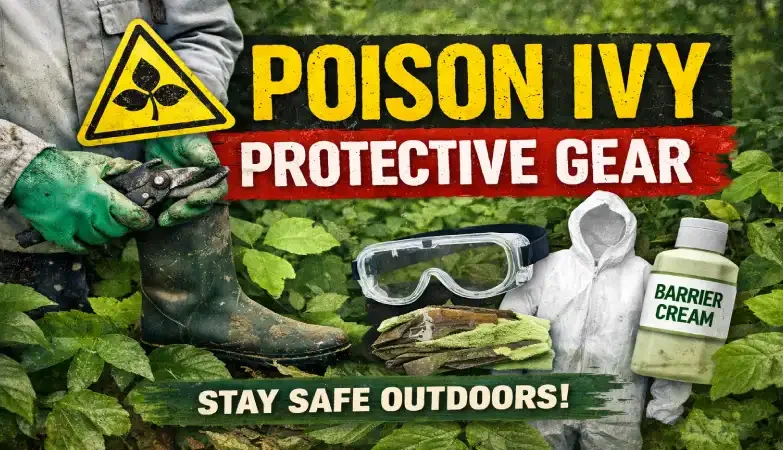
- Thick rubber gloves, not fabric
- Nitrile gloves for light work
- Long cuff gloves, covering wrists
Fabric gardening gloves are comfortable, but they soak up oil. After that, you touch your face. That’s how it gets around. Gear explain moment: gloves don’t last forever. You still take them off carefully.
ARM AND BODY COVERAGE
Long sleeves matter. But material matters more.
Best options:
- Tightly woven cotton
- Synthetic work shirts
- Disposable coveralls for heavy exposure
Sleeves that are loose can brush leaves. Tight cuffs are helpful. Some poison ivy protective gear has elastic wrists for this reason.
LEG PROTECTION
Poison ivy grows low. People forget that.
- Long pants, thick fabric
- Pants tucked into boots
- Avoid shorts, even if it’s hot
Denim is fine. Not thin joggers. The oil can get through. This is one of those boring gear explain details that people skip and then wish they hadn’t.
FOOTWEAR AND BOOTS
Shoes track oil everywhere. Into cars. Houses. Beds. Good poison ivy protective gear includes:
- Rubber boots
- Work boots with sealed leather
- Avoid mesh shoes
After exposure, boots should be cleaned. Not just left outside.
FACE AND EYE PROTECTION (YES, REALLY)
Not everyone thinks about this. But when cutting or pulling plants, bits fly.
- Safety glasses
- Face shields for heavy clearing
If urushiol gets in eyes, it’s serious. This part of poison ivy protective gear feels extreme until you need it.
gear explain note: eye protection is situational, not daily.
DISPOSABLE VS REUSABLE GEAR
This is where opinions differ. Both have a place.
DISPOSABLE GEAR
Pros:
- No washing contamination
- Easy cleanup
- Cheap for short jobs
Cons:
- Tears easily
- Not breathable
- Wasteful
Disposable poison ivy protective gear works best for one-time clearing.
HOW TO REMOVE POISON IVY PROTECTIVE GEAR SAFELY
This part gets ignored. It shouldn’t.
Steps people mess up:
- Touching skin with dirty gloves
- Pulling shirts over head
- Tossing gear on floor
Better way:
- Remove gloves last
- Peel clothing outward
- Wash hands immediately
- Bag disposable gear
This gear explain detail prevents spreading oil after the job is done.
CLEANING YOUR GEAR AFTER USE
Reusable poison ivy protective gear needs washing. Regular detergent works, but timing matters.
Tips:
- Wash separately
- Use hot water
- Run extra rinse
- Clean washer after
You should clean your boots with soap and water. Laces as well. People miss this sometimes. Then get rashes a few days later and blame something else.
SKIN BARRIERS AND CREAMS
Not gear exactly, but part of the system.
Barrier creams:
- Applied before exposure
- Reduce oil absorption
- Not perfect alone
They support poison ivy protective gear, not replace it. Gear explain clarity: creams fail if you sweat heavily.
WHEN YOU NEED FULL PROTECTION
There are times casual gear isn’t enough.
Situations like:
- Clearing overgrown land
- Chainsaw work near vines
- Burning brush (never burn poison ivy)
Full poison ivy protective gear might include:
- Coveralls
- Face shield
- Double gloves
- Sealed boots
This isn’t daily wear. It’s situational defense.
COMMON MISTAKES PEOPLE MAKE
This part matters more than brands.
Mistakes:
- Wearing old clothes without gloves
- Reusing dirty gloves
- Touching phone with contaminated hands
- Letting pets rub against gear
Poison ivy protective gear fails when habits fail. Gear explain again: gear works only when used right.
PETS AND POISON IVY
This drifts a bit, but it matters. Dogs don’t get rashes. But oil sticks to fur. You pet the dog later. Then rash.
Solutions:
- Keep pets away during work
- Wash pets if exposed
- Don’t let them near stored gear
Poison ivy protective gear doesn’t help if oil comes back on fur.
SEASONAL CONSIDERATIONS
Poison ivy isn’t just summer.
- Spring: young plants, still toxic
- Summer: full leaves, high risk
- Fall: leaves fall, oil remains
- Winter: bare vines, still dangerous
So poison ivy protective gear isn’t seasonal either. Just usage changes. Gear explain detail people forget: dead plants still carry oil.
WORK VS HOME USE GEAR
Some people need gear for jobs. Others for weekends.
Work-grade poison ivy protective gear:
- Heavier
- More coverage
- Designed for hours
Home-use gear:
- Lighter
- Easier to wear
- Still protective
Don’t overbuy. Match the task.
COMFORT VS SAFETY BALANCE
This is real talk. Gear gets hot. Uncomfortable. Restrictive. People cut corners because:
- Heat
- Sweat
- Limited movement
But the gear you wear to protect yourself from poison ivy doesn’t have to be extreme all the time. When you can, choose options that let air flow through. Gear explains balance: having some protection is better than having none.
STORING YOUR GEAR
Where you store matters.
Bad storage:
- Near regular clothes
- Inside living spaces
- Open piles
Better:
- Sealed bins
- Garage shelves
- Labeled bags
Poison ivy protective gear shouldn’t mix with daily wear.
QUICK CHECKLIST BEFORE YOU GO OUT
Not fancy, just useful.
- Gloves ready
- Sleeves secured
- Pants tucked
- Shoes closed
- Wash station planned
This small habit makes poison ivy protective gear actually work.
FINAL THOUGHTS, NOT A CONCLUSION
People learn about how to protect themselves from poison ivy the hard way. First, get a rash, then do research. That’s normal. Gear isn’t about being scared. It’s about lessening regret. You can skip it some days and be fine. Not so much on other days. Gear explain isn’t about being perfect. It’s about lowering the risk enough to keep your skin normal and your week itch-free.